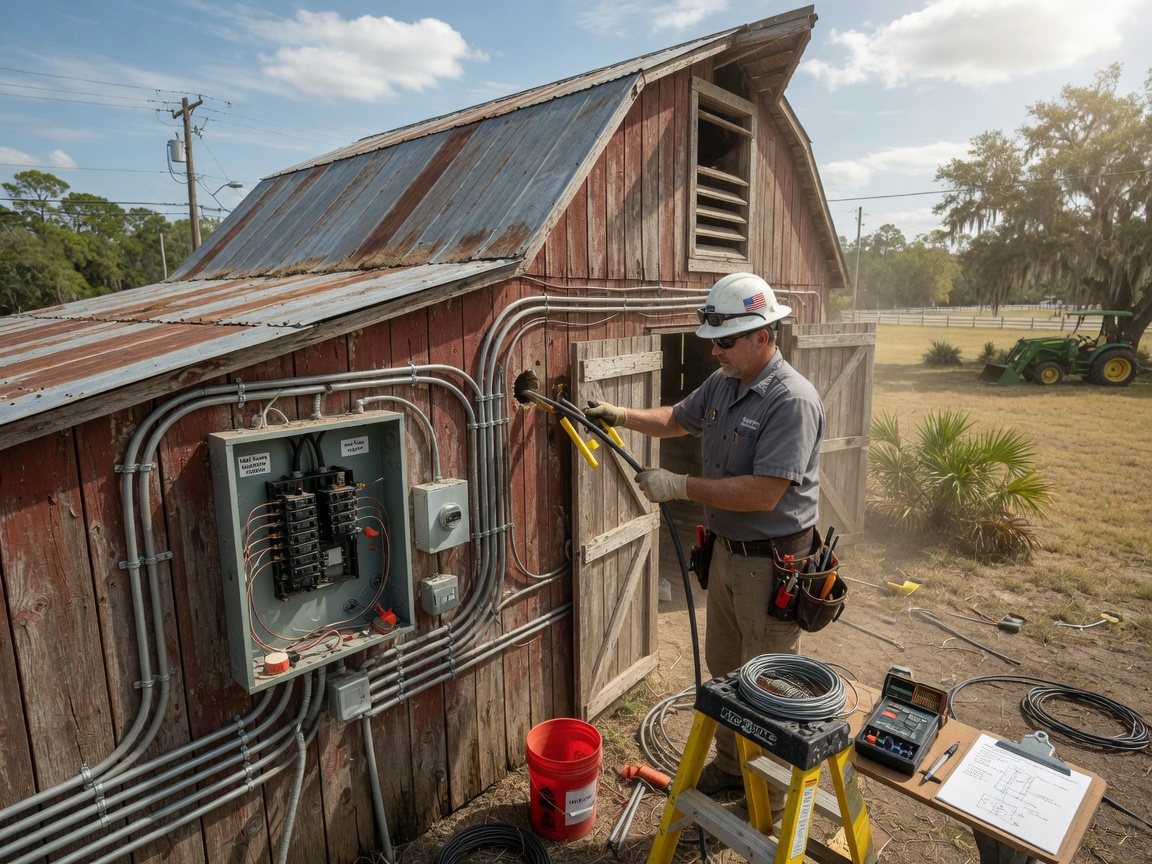
Marion County has more horse farms than anywhere else in the state, and barn electrical work follows different rules from house work. Detached structures need their own grounding electrode system at the building, the feeder has to be sized for the run length rather than just the load, and voltage drop over a few hundred feet of underground feeder is a real design constraint rather than a footnote.
The environment is the other half of it. Dust, ammonia, moisture, and animals mean equipment gets specified differently. Damp location fixtures, guarded lamps where a horse can reach them, and boxes and fittings that will survive a washdown are the baseline, not upgrades.
The common jobs are barn aisle and stall lighting, wash rack circuits with GFCI protection, well house and pump circuits, automatic waterer heaters, and feeders out to arenas and equipment sheds.
Technician insight
Voltage drop is what kills long barn feeders. A conductor sized correctly for the load and incorrectly for the distance will run warm and start motors badly for the life of the installation.